Your Job Is Not Forever
The professionals coming to me right now have something in common.
They're experienced. They're credible. They built deep expertise over 15, 20, sometimes 25 years. They weren't coasting. They believed in the work. They invested in their organisations the way we're told to invest in our careers.
And then the organisation changed direction.
I'm seeing it everywhere. Technology companies restructuring after years of growth. Pharmaceutical giants consolidating. Luxury brands streamlining. International institutions reshaping. The pattern is always the same. Restructuring doesn't target the uncommitted. It usually targets the opposite. The people most deeply invested are often the most exposed.
In Geneva right now, I'm working with long-tenured professionals from multilateral organisations who haven't looked at the job market in 15 years. In Washington, it's policy experts and government contractors after administration changes. In London, private equity executives navigating portfolio reshaping. In Zurich, pharmaceutical scientists after site consolidations. Different sectors, different geographies, same vulnerability.
Because deep investment in one path creates a specific kind of exposure. When that path closes, everything you built there becomes temporarily inaccessible. The expertise that made you valuable doesn't disappear, but the context that made it matter has gone. And if you haven't been building anything else alongside it, you're starting from scratch.
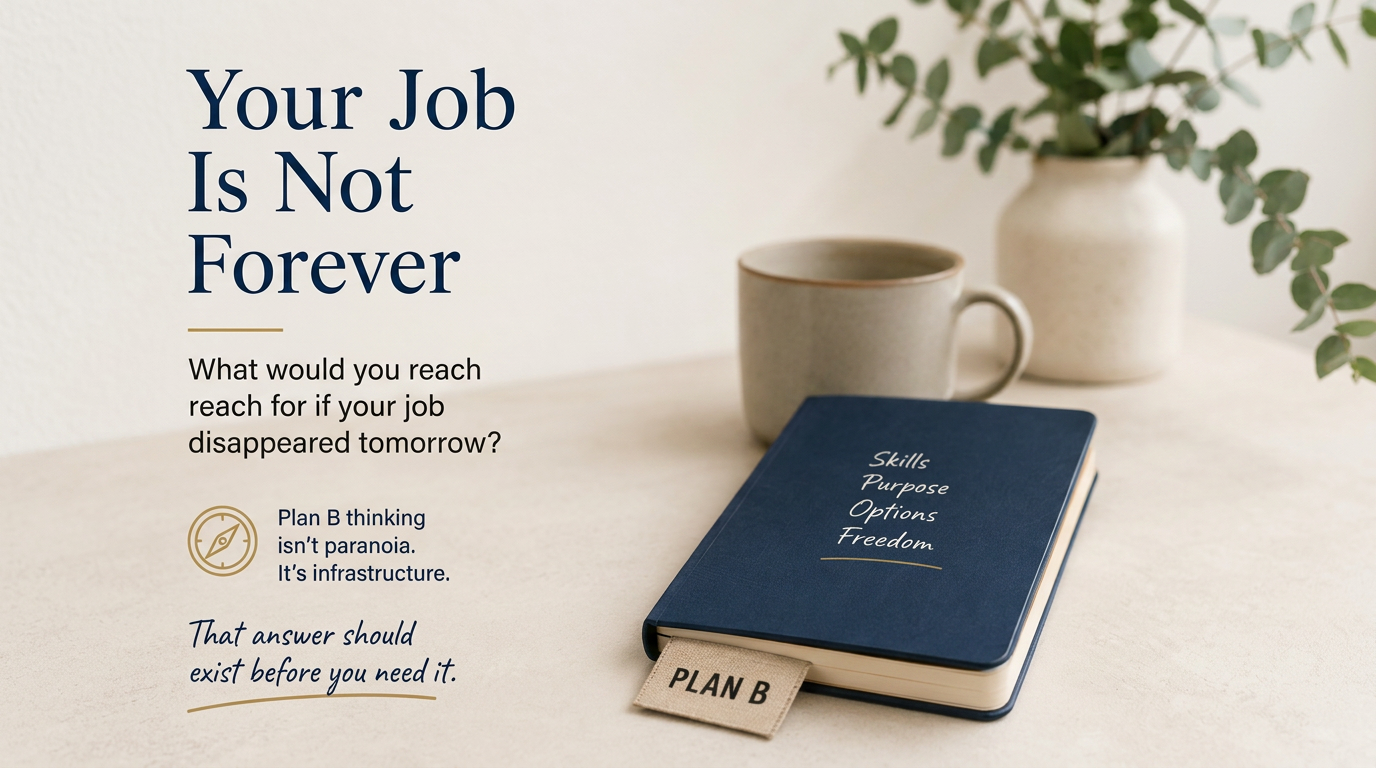
This is where Plan B thinking matters. Not as paranoia. As infrastructure.
Most of us don't have a Plan B. We have vague ideas about what we might do if things went badly. We tell ourselves we're adaptable, that we'd figure it out. But "figuring it out" under pressure, with a mortgage and school fees and a family depending on you, is a very different proposition to having something ready.
So what does Plan B actually look like?
It's not about having a second career waiting in the wings. It's about keeping control while you're still employed.
It means keeping your CV current. Not when you need it, but while you don't. It means taking the odd interview here and there, even when you're happy where you are. Staying interview-ready matters. It means attending those industry conferences you keep meaning to get to. It means networking actively, not just maintaining the relationships you already have.
It means staying visible in your market even when you're not looking. It means building expertise that travels beyond your current role. It means having a side door you could open. Consulting, advisory work, project-based expertise. None of it requires starting from zero.
And yes, it means the boring stuff too. The emergency fund that covers six months, not six weeks. The mortgage protection you keep meaning to sort out. The financial infrastructure that buys you time to make good decisions instead of desperate ones.
This isn't about living in fear. It's about living with your eyes open.
The professionals I'm working with now aren't rebuilding from failure. They're rebuilding from success that became unsustainable when the organisation shifted. They did everything right according to the old contract. Invest deeply, build expertise, demonstrate loyalty, believe in the mission. The contract changed, and they weren't ready.
The wake-up call isn't for them. It's for the rest of us.
If everything you've built in your current organisation became unavailable tomorrow. Not because you failed, but because the organisation changed direction. What would you reach for? Not theoretically. Actually.
That answer should exist before you need it.
So here's the question: what are you building alongside?
Not instead of. Alongside. The career insurance you're investing in while things are stable. The skills you're keeping sharp. The network you're maintaining. The financial buffer you're creating. The alternative path you're keeping warm.
Because the people losing their jobs right now weren't any less committed than you. They weren't less talented. They weren't less strategic. They just didn't see it coming.
And next time, it might not be them.
It might be you.
If this resonated with you, I'd love to continue the conversation.
Get in Touch